

In electronics manufacturing, soldering technology plays a critical role in ensuring the quality and reliability of circuit boards. Among the various methods, Wave Soldering and Reflow Soldering are two widely used techniques in the PCBA assembly process. Each method has its own characteristics and applications, making it suitable for different component types and production requirements. This article explores their differences and helps you choose the most optimal solution.
1. Wave Soldering
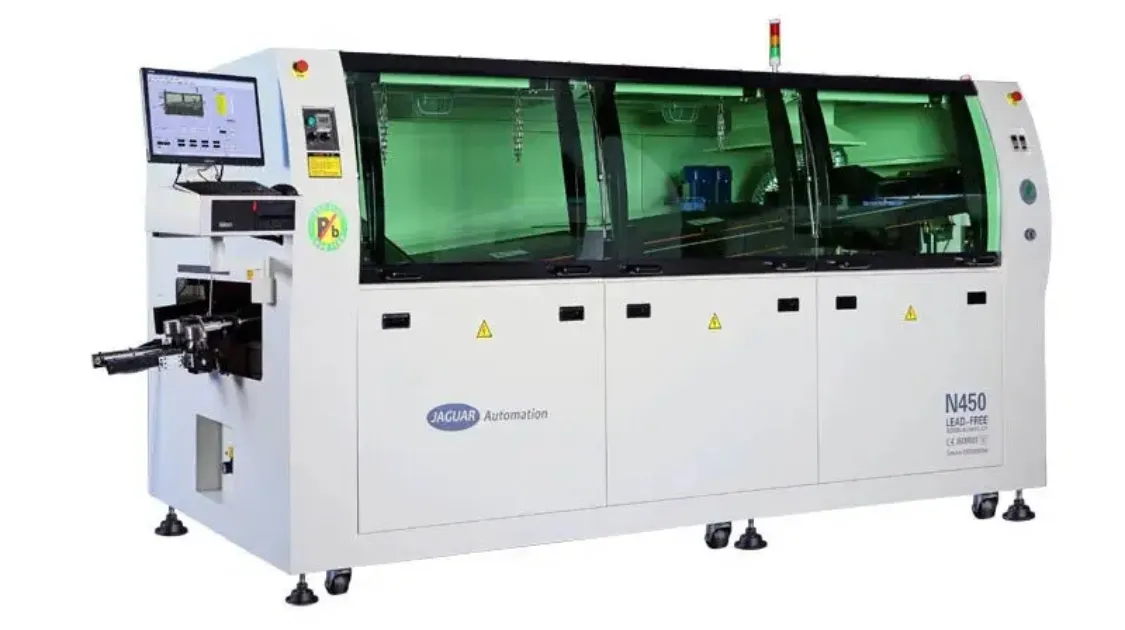
Wave Soldering is a soldering method used to mount electronic components onto a Printed Circuit Board (PCB) by passing the board over a wave of molten solder. This technology is primarily applied to through-hole technology (THT) components and is widely used in PCBA manufacturing due to its high efficiency and reliable performance.
– Operating Principle:
Wave Soldering works by allowing the PCB to pass over a wave of molten solder to form electrical and mechanical connections between components and the board. First, the PCB is coated with a layer of flux to clean the surface and enhance solder wettability. Next, the board undergoes preheating to activate the flux and reduce thermal shock. As the PCB moves across the solder bath, the molten wave contacts the component leads, forming strong and conductive solder joints. Finally, the board is cooled to solidify the joints and ensure product durability.
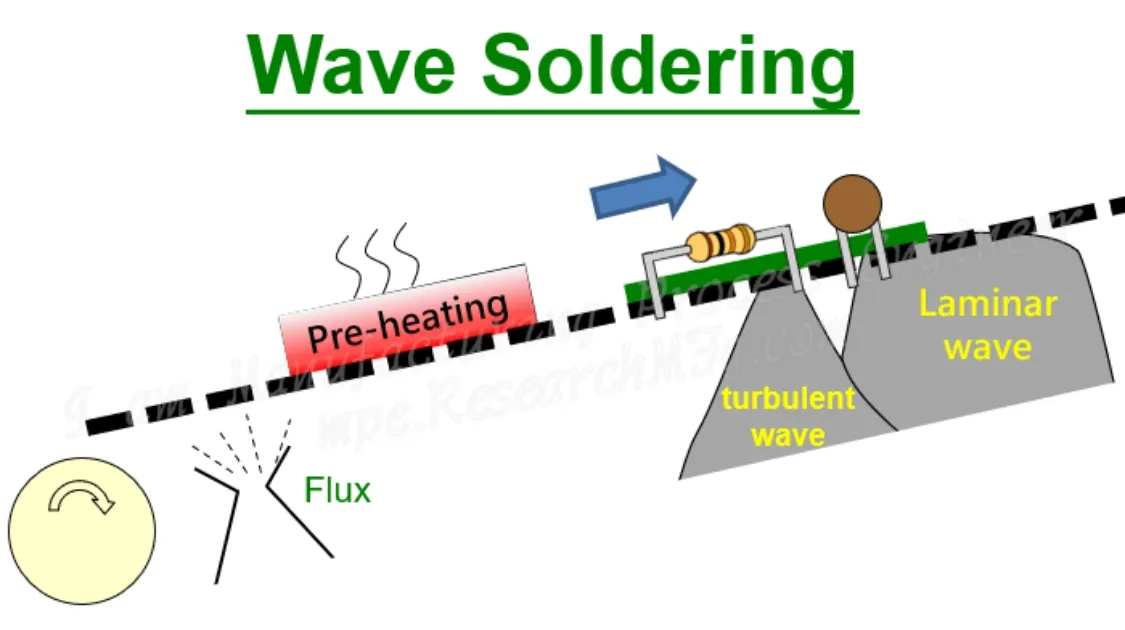
– Advantages:
- Suitable for through-hole technology (THT) components.
- High productivity, ideal for mass production.
- Produces strong and reliable solder joints.
- Easily integrated into automated production lines.
- Cost-effective for industrial applications.
– Key Applications:
- PCBs using through-hole technology (THT).
- Power supply and power electronics circuits.
- Boards with connectors, terminals and large components.
- Mixed-technology PCBs (SMT–THT) for soldering through-hole components after the reflow process.
2. Reflow Soldering
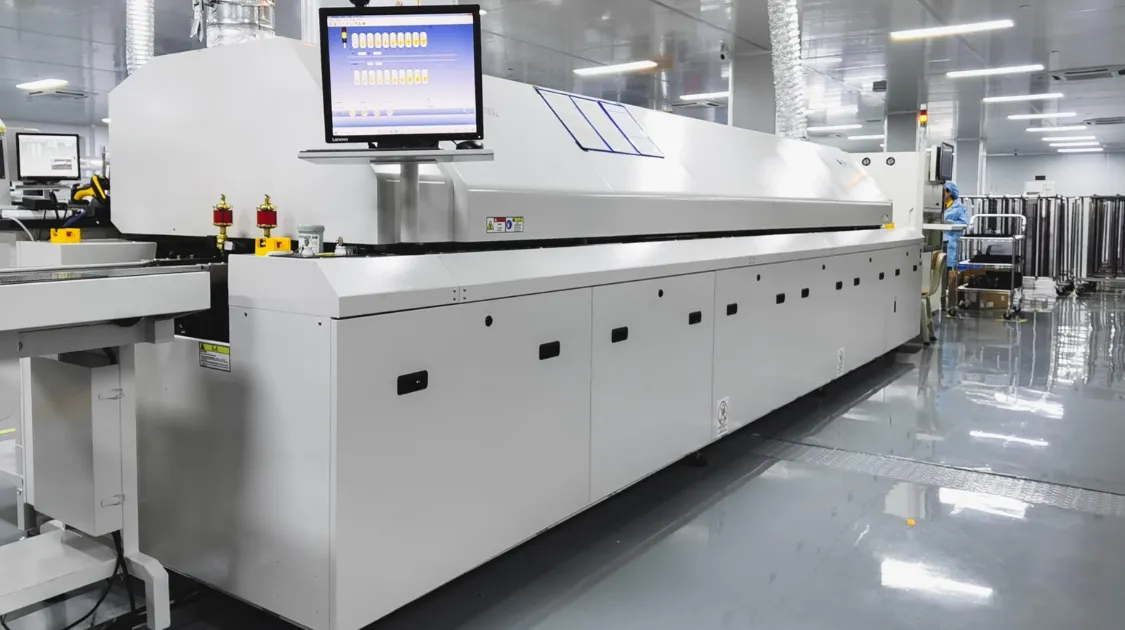
Reflow Soldering is a soldering method that uses solder paste and a controlled heating process to mount electronic components onto the surface of a Printed Circuit Board (PCB). It is the core technology in Surface Mount Technology (SMT) assembly and is widely adopted in modern electronics manufacturing due to its high precision and automation capabilities.
– Operating Principle:
Reflow Soldering works by melting solder paste to form electrical and mechanical connections between components and the PCB. First, solder paste is printed onto the pads on the board surface. Next, SMT components are accurately placed using automated pick-and-place machines. The PCB then passes through a reflow oven with carefully controlled temperature zones, including preheating, soaking, reflow and cooling. When the solder reaches its melting point, it liquefies and forms strong, reliable solder joints. Finally, the board is cooled to solidify the connections and ensure long-term stability.
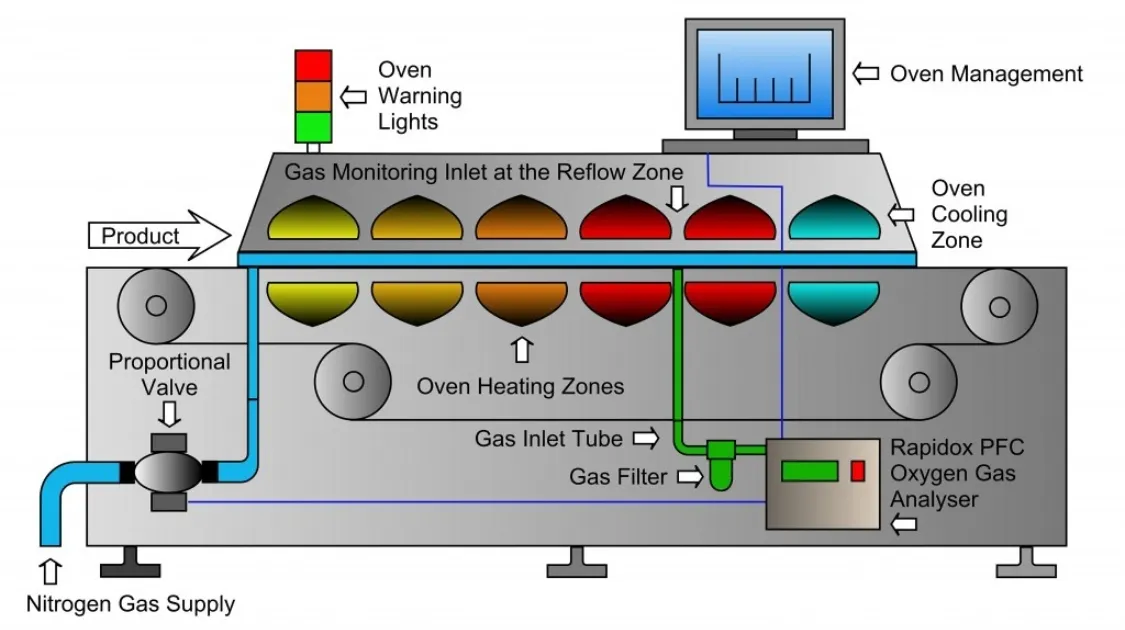
– Advantages:
- Suitable for surface mount technology (SMT) components.
- High precision, ensuring uniform and reliable solder joints.
- Ideal for high-density and compact PCB designs.
- Easily automated for mass production.
- Compatible with both leaded and lead-free solder.
– Key Applications:
- PCBs using surface mount technology (SMT).
- High-Density Interconnect (HDI) boards.
- Multilayer PCBs.
- Electronic circuits requiring high precision and stability.
This method plays a critical role in manufacturing modern electronic devices, particularly those that demand miniaturization, performance and reliability.
3. Comparison Between Wave Soldering and Reflow Soldering
Wave Soldering and Reflow Soldering are two essential soldering technologies in PCBA manufacturing, each designed to meet different technical requirements. Comparing these methods helps businesses select the most suitable solution based on PCB design and production objectives.
| Criteria | Wave Soldering | Reflow Soldering |
|---|---|---|
| Principle | PCB passes over a wave of molten solder | Solder paste is melted in a reflow oven |
| Component Type | Primarily through-hole technology (THT) components | Primarily surface mount technology (SMT) components |
| Soldering Material | Molten solder and flux | Solder paste |
| Process | Fluxing → Preheating → Wave soldering → Cooling | Solder paste printing → Component placement → Reflow → Cooling |
| Precision | Moderate | High |
| Automation Capability | High | Very high |
| Suitable PCB Types | THT PCBs, power circuits and mixed-technology boards | SMT PCBs, HDI boards and high-density assemblies |
| Solder Joint Quality | Strong and mechanically robust | Uniform, precise and reliable |
| Production Scale | Ideal for high-volume THT production | Optimized for modern SMT mass production |
| Role in PCBA | Soldering through-hole components | Soldering surface-mounted components |
From the comparison above, Wave Soldering is best suited for through-hole components and applications requiring high mechanical strength, while Reflow Soldering is the optimal choice for SMT technology and modern electronic designs.
4. How to Choose Between Wave Soldering and Reflow Soldering
The choice between Wave Soldering and Reflow Soldering depends on PCB design, component types and production requirements. Each method is suited to specific applications within the PCBA assembly process.
- Reflow Soldering: The optimal choice for surface mount technology (SMT) components, especially in modern electronic products that require high precision, high component density and advanced automation.
- Wave Soldering: Ideal for through-hole technology (THT) components, commonly used in power supplies and applications that demand high mechanical strength and reliability.
- Combination of Both Methods: For mixed-technology PCBs, Reflow Soldering is performed first to mount SMT components, followed by Wave Soldering to complete the assembly of through-hole components.
Selecting the appropriate soldering method not only ensures high-quality solder joints but also optimizes cost and production efficiency in the PCBA manufacturing process.
5. Common Misconceptions About Wave Soldering and Reflow Soldering
In practice, Wave Soldering and Reflow Soldering are often misunderstood because both are widely used in the PCBA assembly process. These misconceptions can lead to inappropriate technology selection and reduced manufacturing efficiency.
- Wave Soldering can completely replace Reflow Soldering: This is incorrect. Wave Soldering is primarily used for through-hole technology (THT) components, whereas Reflow Soldering is designed for surface mount technology (SMT) components.
- Reflow Soldering is only used for high-end products: In reality, it is the standard method in modern electronics manufacturing, ranging from consumer devices to industrial equipment.
- The two methods cannot be used together: Many PCBs employ mixed technology (SMT and THT), combining both soldering methods within the PCBA process.
- Wave Soldering is always less expensive: Costs depend on PCB design, component types and production volume, not solely on the soldering technology.
- Soldering alone is sufficient without inspection: Regardless of the method used, inspection processes such as AOI, ICT and X-ray are essential to ensure product quality.
Understanding these misconceptions enables manufacturers to select the appropriate soldering technology, optimize production processes and enhance product reliability.
Conclusion
Wave Soldering and Reflow Soldering are essential technologies in PCBA manufacturing, each suited to specific component types and technical requirements. Wave Soldering is optimal for through-hole components, while Reflow Soldering is the standard choice for modern SMT assembly. Selecting the appropriate method enhances product quality and optimizes production efficiency.