

In the electronic circuit board assembly process, solder joint quality is a key factor influencing product performance and reliability. To achieve precise and stable connections between components and printed circuit boards (PCBs), manufacturers depend on a vital material – solder paste. What is solder paste, what are its main components, and how does it contribute to SMT? This article provides a comprehensive overview.
1. What Is Solder Paste?
Solder paste is an essential material in Surface Mount Technology (SMT), used to mount electronic components onto PCB. It is a viscous mixture composed of finely powdered solder alloy and flux, designed to create reliable electrical and mechanical connections after the soldering process.
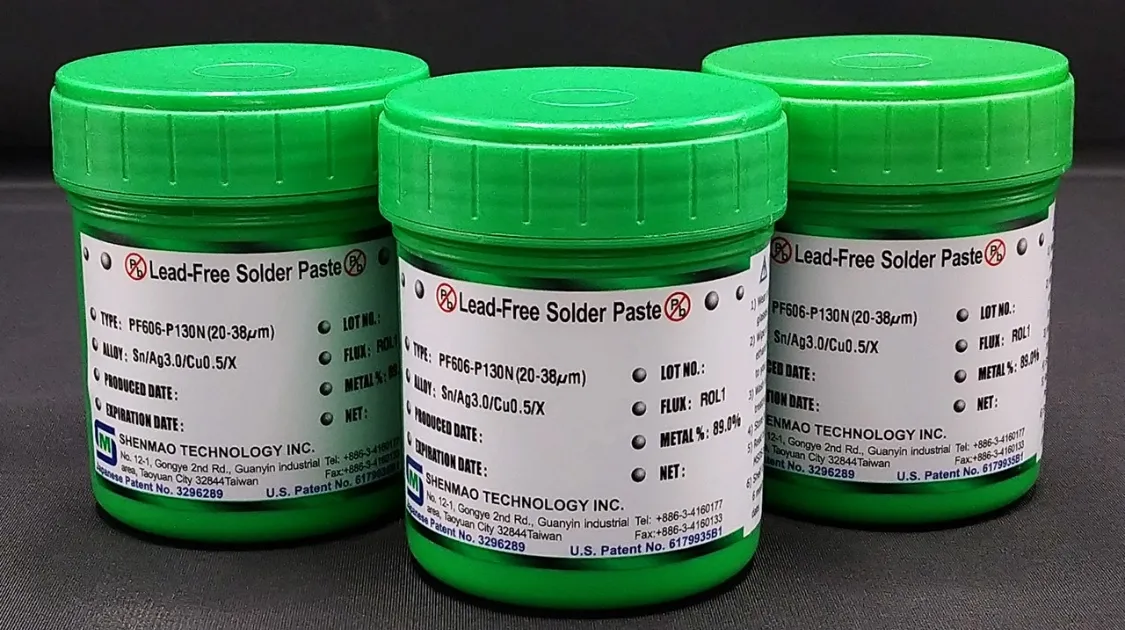
In the PCBA manufacturing process, solder paste is applied to the PCB surface through a stencil printing process. During reflow soldering, the solder alloy melts and forms strong, permanent joints that ensure excellent electrical conductivity, stability and reliability of electronic products.
Due to its critical role, solder paste directly impacts assembly quality, production efficiency and the lifespan of electronic devices. Therefore, understanding its properties and applications is essential for success in modern electronics manufacturing.
2. Composition of Solder Paste
Solder paste is a specially engineered mixture designed to ensure optimal soldering performance in SMT. It typically consists of three main components: solder alloy powder, flux and additives. The precise balance of these elements determines solder joint quality, printability and the overall reliability of electronic products.
2.1. Solder Alloy Powder
Solder alloy powder accounts for approximately 85–90% of the total weight of solder paste and is composed of ultra-fine metallic particles. Common compositions include:
- Leaded alloys: Sn63Pb37.
- Lead-free alloys: SAC305 (Sn96.5Ag3.0Cu0.5).
This component determines the melting temperature, mechanical strength and electrical conductivity of the solder joints. The particle size and shape also influence printing accuracy and performance in fine-pitch applications.
2.2. Flux
Flux typically makes up 10–15% of the solder paste and plays a vital role in the soldering process. Its primary functions include:
- Removing oxide layers from metal surfaces.
- Improving wettability and adhesion.
- Preventing re-oxidation during heating.
- Facilitating the melting and uniform spreading of the solder alloy.
Common types of flux include No-Clean, Water-Soluble and Rosin-Based formulations, each suited to specific manufacturing and cleaning requirements.
2.3. Additives
Additives are incorporated to enhance the performance and stability of solder paste. Their key functions include:
- Adjusting viscosity and improving printability.
- Minimizing solder paste slump.
- Enhancing storage stability and shelf life.
- Improving solder joint quality and reducing defects.
Through the precise combination of these three components, solder paste ensures efficient assembly, enhances product quality and optimizes the PCBA manufacturing process.
3. Classification of Solder Paste
Solder paste is classified based on alloy composition, metal particle size and flux type. Selecting the appropriate type helps optimize the SMT process, improve solder joint quality and ensure the reliability of electronic products.
3.1. Classification by Alloy Composition
– Leaded Solder Paste:
- Common composition: Sn63Pb37.
- Offers a low melting point and excellent wettability.
- Easy to process and produces reliable solder joints.
- Restricted in many applications due to environmental regulations such as RoHS.
– Lead-Free Solder Paste:
- Typically uses SAC alloys, such as SAC305 (Sn96.5Ag3.0Cu0.5).
- Compliant with RoHS and environmentally friendly.
- Widely adopted in modern electronics manufacturing.
- Provides high reliability and mechanical strength.
3.2. Classification by Metal Particle Size
Particle size directly affects printing accuracy and the ability to assemble fine-pitch components.
- Type 3 (25–45 µm): Suitable for standard SMT applications.
- Type 4 (20–38 µm): Ideal for fine-pitch and high-density assemblies.
- Type 5 (15–25 µm): Used for ultra-fine-pitch and advanced designs.
- Type 6 (5–15 µm): Applied in microelectronics and ultra-precision printing.
3.3. Classification by Flux Type
– No-Clean:
- Leaves minimal residue after soldering.
- Typically does not require post-cleaning.
- Helps reduce manufacturing costs and processing time.
– Water-Soluble:
- Easily cleaned with water.
- Suitable for applications requiring high reliability and cleanliness.
– Rosin-Based:
- Derived from natural rosin.
- Provides excellent soldering performance.
- Requires cleaning after the soldering process.
3.4. Classification by Flux Activity Standards (IPC)
According to the IPC J-STD-004 standard, flux in solder paste is categorized as follows:
- ROL0, ROL1: Low activity with minimal residue.
- ROM0, ROM1: Moderate activity for general applications.
- ROH0, ROH1: High activity, suitable for difficult-to-solder surfaces.
Understanding these classifications enables manufacturers to select the most appropriate solder paste based on PCB design, technical requirements and industry standards, thereby enhancing assembly efficiency and ensuring product quality in electronics manufacturing.
4. Applications of Solder Paste in SMT
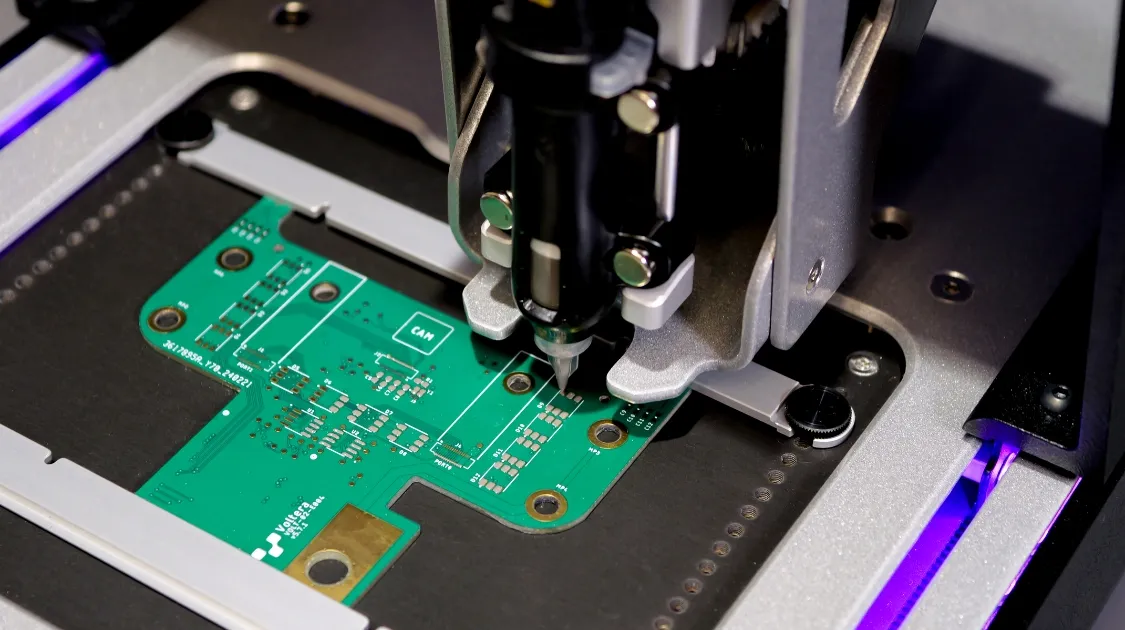
In SMT, solder paste is used to create both electrical and mechanical connections between electronic components and PCBs. With its excellent conductivity and strong adhesion, solder paste plays a critical role in ensuring product quality and reliability.
- SMD Assembly: Solder paste enables the precise mounting of components such as resistors, capacitors, transistors and integrated circuits (ICs) onto PCBs.
- High-Density PCB Manufacturing: In miniaturized and high-density designs, solder paste ensures accurate deposition and minimizes soldering defects.
- Automated SMT Production Lines: Compatible with stencil printing systems and reflow ovens, solder paste enhances productivity, consistency and manufacturing efficiency.
- Manufacturing of Modern Electronic Devices: Solder paste is widely used in industries such as consumer electronics, automotive, medical devices, telecommunications and industrial automation.
Thanks to these diverse applications, solder paste has become an indispensable material in modern electronics manufacturing.
5. Key Technical Specifications of Solder Paste
The technical specifications of solder paste directly affect printability, solder joint quality and SMT process performance. Understanding these parameters enables manufacturers to select suitable materials and optimize PCBA production.
- Alloy Composition: Determines the melting temperature and mechanical strength of solder joints. Common alloys include Sn63Pb37 and SAC305.
- Powder Particle Size: Classified into Type 3, Type 4 and Type 5, influencing printing accuracy and suitability for fine-pitch components.
- Viscosity: Affects stencil printability and the stability of solder paste on PCB surfaces.
- Wettability: Indicates the ability of molten solder to spread across pads and component leads.
- Metal Content: Typically accounts for 85–90% of the paste by weight, impacting conductivity and joint reliability.
- Melting Temperature: Must align with the reflow thermal profile to ensure effective soldering.
- Stencil Life: Refers to the duration during which solder paste maintains stable performance during printing.
- Shelf Life: Indicates the allowable storage period under recommended conditions.
- Slump Resistance: Measures the paste’s ability to retain its shape after printing, preventing bridging defects.
- Standards and Compliance: Conforms to international standards such as IPC J-STD-005, IPC J-STD-004 and RoHS.
By carefully controlling and selecting solder paste according to these specifications, manufacturers can improve solder joint quality, reduce production defects and ensure the long-term reliability of electronic products.
6. Storage and Handling of Solder Paste
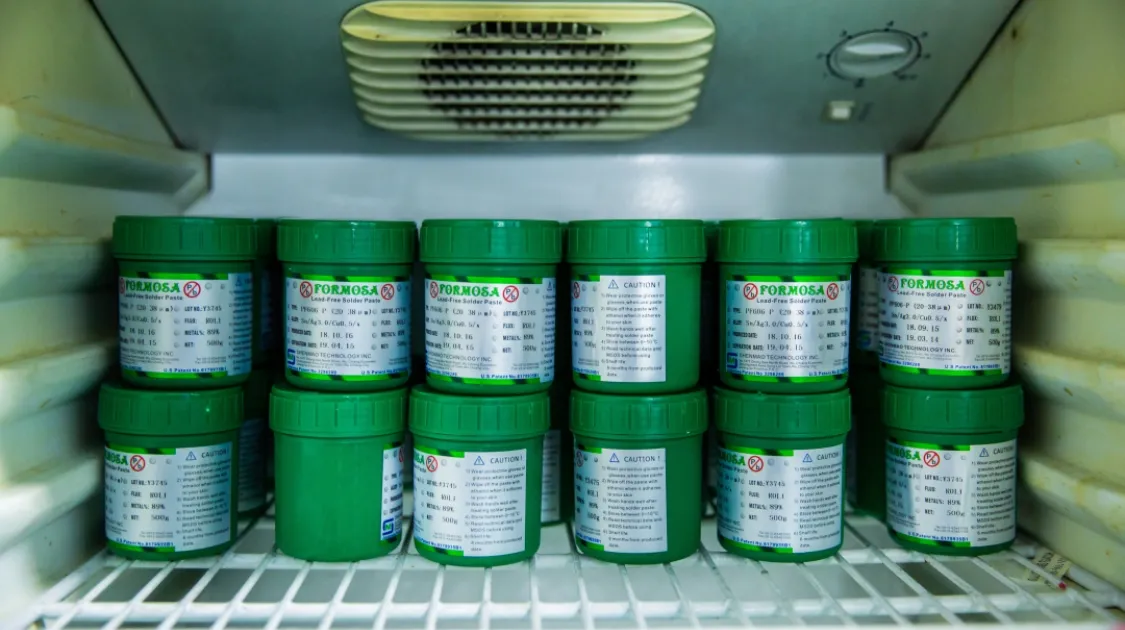
Proper storage and handling of solder paste help maintain its material properties, ensure high-quality solder joints and optimize the efficiency of the SMT process. Failure to comply with standard conditions may lead to performance degradation and defects during PCBA production.
6.1. Solder Paste Storage
- Store at 2–10°C to maintain stability.
- Keep containers tightly sealed to prevent contamination and oxidation.
- Follow the expiration date and the FIFO (First In, First Out) principle.
- Avoid direct sunlight and do not allow the solder paste to freeze.
6.2. Preparation Before Use
- Allow the solder paste to reach room temperature for 2–4 hours before use.
- Do not use forced heating to accelerate the warming process.
- Gently stir according to the manufacturer’s recommendations.
- Open the container only after it reaches room temperature to prevent moisture condensation.
6.3. Precautions During Use
- Maintain the working environment at 20–25°C with 40–60% relative humidity.
- Control stencil life to ensure consistent printing quality.
- Do not reuse printed or contaminated solder paste.
- Follow the manufacturer’s technical guidelines.
7. How to Choose the Right Solder Paste
Selecting the appropriate solder paste plays a crucial role in ensuring solder joint quality, optimizing the SMT process and enhancing the reliability of electronic products. To achieve the best manufacturing performance, companies should carefully evaluate technical factors and specific application requirements.
7.1. Selection by Alloy Type
- Leaded Solder Paste (Sn63Pb37): Easy to solder with a low melting point, suitable for traditional and legacy applications.
- Lead-Free Solder Paste (SAC305): Environmentally friendly and compliant with RoHS standards, making it the most widely used option in modern electronics manufacturing.
7.2. Selection by Powder Particle Size
Particle size directly affects printing accuracy and solder joint quality.
- Type 3: Suitable for standard SMT applications.
- Type 4: Ideal for fine-pitch components.
- Type 5 and above: Designed for high-density assemblies and microelectronics.
7.3. Selection by Flux Type
- No-Clean: Leaves minimal residue and typically requires no post-solder cleaning.
- Water-Soluble: Easy to clean and suitable for applications requiring high reliability.
- Rosin-Based: Provides effective oxide removal and excellent soldering performance but requires post-solder cleaning.
7.4. Selection Based on Design and Manufacturing Requirements
- Compatible with PCB pad sizes and component dimensions.
- Suitable for the reflow oven’s thermal profile.
- Compliant with IPC standards and product-specific technical requirements.
- Optimized for stencil printing performance and defect reduction.
7.5. Selection by Application Industry
- Consumer Electronics: Focus on cost-effectiveness and production efficiency.
- Automotive and Medical Devices: Require high reliability and strict quality standards.
- Industrial and Telecommunications Equipment: Demand stable performance in harsh environments.
In summary, selecting the right solder paste not only enhances PCBA quality but also optimizes production costs and efficiency. Manufacturers should carefully review technical specifications and conduct practical trials to determine the most suitable solution.
Conclusion
Solder paste is an essential material in SMT, playing a decisive role in determining solder joint quality and the reliability of PCBs. A thorough understanding of its composition, classification and applications helps optimize the PCBA manufacturing process. Proper storage and careful selection of solder paste further minimize defects and enhance production efficiency. As a result, it remains a critical factor in ensuring the quality and performance of modern electronic products.